Synonyms: ***Majority attack***
1. A condition in which more than half the computing power of a [[Crypto (cryptocurrency)|cryptocurrency]] network is controlled by a single malicious [[Miner(s)|miner]] or [[Mining Pool(s)|group of miner]]s. If he controls 51% of the network that makes him the authority on the network, giving him the power to spend the same [[Coin(s)|coin]] multiple times, issue [[Transaction(s)|transactions]] that conflict with someone else’s or stop someone else’s transaction from being confirmed.
3. When more than half of the computing power of a cryptocurrency network is controlled by a single entity or group, this entity or group may issue conflicting [[Transaction(s)|transactions]] to harm the network, should they have the malicious intent to do so.
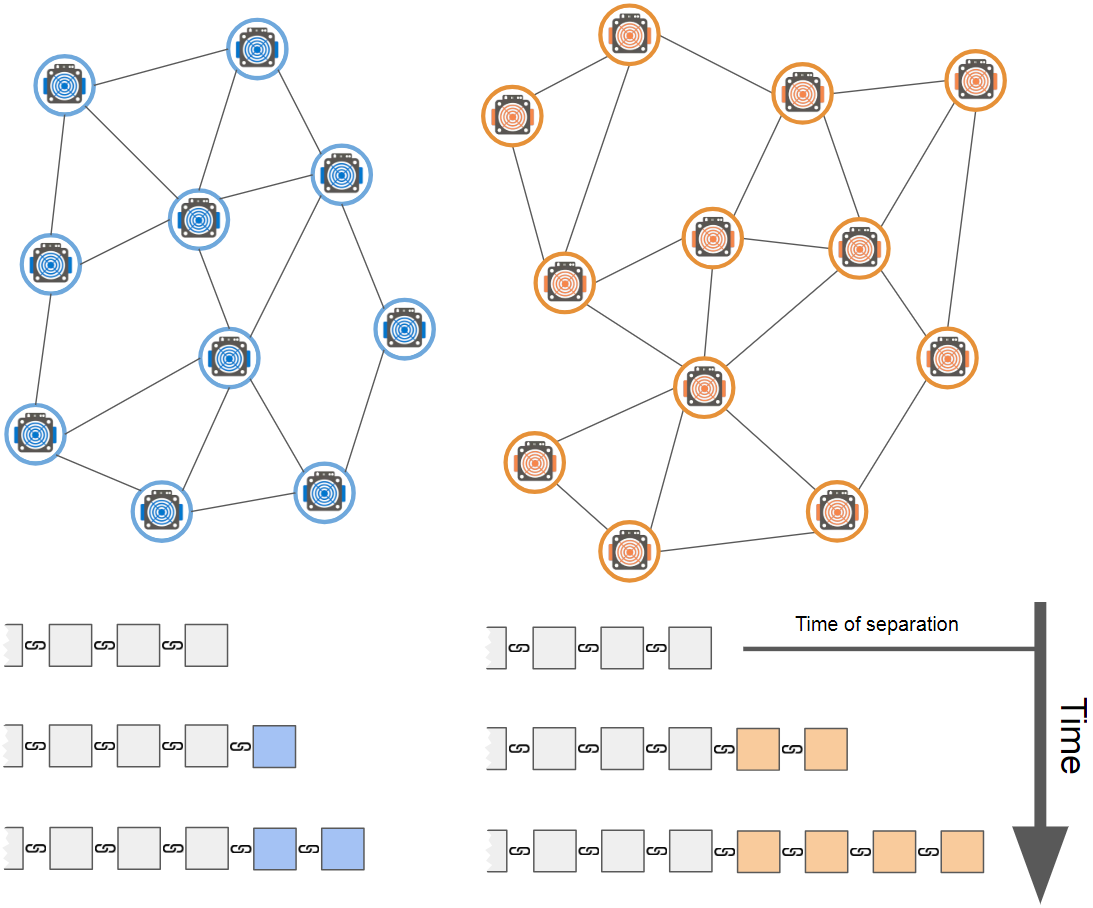
5. A 51% attack is a hypothetical scenario in which more than 50% of a [[Blockchain|blockchain]] network's [[Node(s)|nodes]] fall under the control of a single group. In such a circumstance, the [[Consensus Mechanism (algorithm)|consensus]] of a network is no longer sufficiently distributed enough to be viable, leaving the blockchain open to manipulation. [[Attack (hack)|Attackers]] with greater than 50% control of a network would be able to stop, reverse, and duplicate new [[Transaction(s)|transactions]], a catastrophic condition for any blockchain. Notably, a 51% attack becomes more difficult and expensive as a network grows more sizable, distributed, and valuable.
4. If more than half the computer power or mining [[Hashrate|hash rate]] on a network is run by a single person or a single group of people, then a 51% attack is in operation. This means that this entity has full control of the network and can negatively affect a [[Crypto (cryptocurrency)|cryptocurrency]] by taking over [[Mining|mining]] operations, stopping or changing [[Transaction(s)|transactions]], and [[Double Spend|double-spending]] coins.
5. The ability of someone controlling a majority of network [[Hashrate|hash rate]] to revise [[Transaction(s)|transaction]] history and prevent new transactions from confirming.
7. A 51% Attack is a type of potential [[Attack (hack)|attack]] on the [[Bitcoin (blockchain)]] network where an individual or organization obtains control over a majority of the overall network [[Mining|mining]] power ([[Hashrate| hash rate]]) and then attempts to manipulate the general [[Ledger|ledger]] to approve or disapprove chosen [[Transaction(s)|transactions]] by way of majority approval.
9. 51% Attack refers to a situation where a majority of [[Blockchain|blockchain]] [[Mine(s)|miners]] make an attack on the rest of [[Node(s)|nodes]], by changing/ stopping [[Transaction(s)|transactions]], taking over mining operations, or [[Double Spend|double spending]] [[Coin(s)|coins]].
9. [[Crypto (cryptocurrency)]]'s strength comes from a [[Distributed (network)|distributed]] computer network. If anybody gains control of more than 50% of them, they control the network and can [[Double Spend|double spend]] [[Coin(s)|coins]].
11. A situation in which a majority of [[Miner(s)|miners]] in the [[Blockchain|blockchain]] launch an [[Attack (hack)|attack]] on the rest of the [[Node(s)|nodes]] (or users). This kind of attack allows for [[Double Spend|double spending]].
12. A 51% attack refers to a malicious actor (or group acting in concert), controlling over 50% of the total [[Mining|mining power]] of the blockchain network and disrupting the integrity of the [[blockchain]].
Due to the way blockchain functions, [[Consensus Mechanism (algorithm)|consensus]] is required for transactions to be confirmed or added. A bad actor who controls the majority of the hashing or mining power can theoretically "form the majority" in this consensus mechanism and disrupt the integrity of the blockchain by modifying the order of [[Transaction(s)|transactions]], preventing transactions from being confirmed, or [[Double Spend|double spend]].
The risk of a 51% attack is higher for blockchains with less hashing power, as it is easier for a malicious actor to procure the required majority computing power. The more [[Miner(s)|miners]] and resources spent [[mining]] a blockchain, the safer the blockchain is. The Bitcoin network is recognized as the safest blockchain in existence as it has the largest amount of hashing power mining it.
12. The ability of someone controlling a majority of network [[Hashrate|hahs rate]] to revise [[Transaction(s)|transaction]] history and prevent new transactions from confirming.
14. An [[Attack (hack)|attack]] on the [[Blockchain|blockchain]] that results in a group of [[Mine(s)|miners]] controlling over 50% of the network’s [[Mining|mining]] [[Hashrate]]. A term used mostly in reference to [[Proof of Work (PoW)]] coins.
16. In case a majority (i.e. more than fifty percent) of computing power or mining [[Hashrate]] on a specified network is governed by one individual (or a single group), it implies that a 51% attack is underway. This is because a singular governing entity now has complete control over the system’s native ecosystem and has full power to take over the platform’s [[Mining]] operations, internal [[Transaction(s)|transactions]], etc.
14. That is a situation where more than half of the [[Crypto (cryptocurrency)|cryptocurrency]] network computational resource is controlled by one system member or a group of people. In theory, such a computational resource power volume allows conducting conflicting transactions or might damage the system.
16. Also known as a Majority [[Attack (hack)|Attack]]. When one or a group of [[Miner(s)|miners]] control greater than 50% of the network's [[Mining|mining]] [[Hashrate|hash rate ]]or computational power.
18. A 51% attack is an attack on a [[Proof of Work (PoW)]] blockchain where a group of [[Miner(s)|miners]] controlling more than 50% of the network’s [[Mining|mining]] hash use this power to prevent new [[Transaction(s)|transactions]] from being confirmed or reverse transactions that were completed under their control, leading to a [[Double Spend]] attack. Once this happens, there is nothing written into the [[Blockchain|blockchain]] technology that can stop the attack. However, the biggest cost resulting from a 51% attack is the loss of confidence in the blockchain.
**Has a 51% attack happened before?**
In August 2016, two [[ERC 20]] tokens, [[Krypton]] and [[Shift]], fell victim to 51% attacks. As a result, Krypton moved KR from an [[Ethereum (blockchain)]]-based [[Proof of Work (PoW)]] blockchain to a Bitcoin-based proof of stake blockchain.
In July 2016, the [[Mining Pool(s)|mining pool]] GHash.io briefly exceeded 50% of the bitcoin network’s mining [[Hashrate|hashrate]], resulting in the pool voluntarily committing to reducing its share of the network. In a statement following the event, “Bitcoin pool GHash.io commits to 40% hashrate limit after its 51% breach.”
___